There’s a moment, usually somewhere between the fourth nappy change of the day and reheating your tea for the third time, when you start to wonder: When can I run again after having a baby?
Not because you’re desperate to train for a marathon. But because running, for many women, is more than exercise. It’s headspace. It’s identity. It’s the one thing that used to belong entirely to you.
So when can you realistically return to it?
Most pelvic health specialists suggest waiting around 12 weeks postpartum before returning to running properly. But its important to remember that that number isn’t a green light. It’s a guideline - a framework based on how long tissues generally take to heal and how long it takes the body to regain foundational strength.
And that’s where the nuance lies.
The Problem With the 6-Week Check
Many women leave their six-week postnatal GP appointment assuming they’ve been cleared for everything. After all, you’ve likely been told you’re “fine.” But that appointment isn’t designed to assess whether your pelvic floor can tolerate the repeated force of your body weight hitting the ground hundreds of times over a 5K distance.
It’s a general medical check, not a functional movement assessment.
Running is high impact. Every stride sends force through your pelvic floor, your abdominal wall and your hips. During pregnancy, those systems have stretched, softened and adapted to grow a baby. After birth — whether vaginal or caesarean — they need time and progressive loading to recover.
Which is why most physiotherapists land on that 12-week mark.

Why 12 Weeks Isn’t Random
Pelvic health physiotherapists, including those who co-authored widely referenced return-to-running guidance, recommend waiting at least 12 weeks before resuming high-impact sport.
That timeframe aligns with typical musculoskeletal healing patterns. Connective tissues need time. Abdominal muscles need retraining. The pelvic floor needs both strength and coordination restored. Sleep deprivation - often underestimated - also affects recovery capacity.
But it isn’t a stopwatch. Some women may feel ready slightly earlier; others may need 16 or even 20 weeks before impact feels controlled and symptom-free.
It's vital to remember that when you are looking to return to running after having your baby that your recovery is individual - comparison is at best unhelpful.
The Emotional Rush Back
Often, the urge to run again isn’t purely physical, it’s about reclaiming something familiar to you at a time of your life where everything feels new and different.
Many women admit to rushing because they’re scared of losing themselves - and I’d include myself in that too. That urgency is understandable - but returning too soon can create setbacks that prolong recovery rather than speed it up. Leaking, pelvic heaviness or persistent discomfort are not badges of honour. They’re signals and you must listen to them or risk doing yourself more harm in the long term.
Rebuilding gradually is not about a lack of ambition, it is about intelligently ensuring that your comeback is the best it can be.
Walk Before You Run (Even If It Sounds Boring)
Walking might not deliver the same adrenaline hit, but it’s a powerful foundation. A brisk walk builds cardiovascular fitness while conditioning tissues for load. Starting with ten minutes, then increasing to fifteen or twenty, allows your body to adapt without overwhelming it.
Strength work matters too. Pelvic floor exercises, progressive core work, squats and lunges help restore stability. Cycling or swimming (once bleeding has stopped) are great ways to build up cardiovascular strength without impact. When you eventually reintroduce running, following a graded plan such as Couch to 5K allows you to build volume before intensity.
It may feel slower than you’d like, but slower now is often faster later.
What If You Had a C-Section?
A caesarean birth is major abdominal surgery. The incision may heal externally within weeks, but deeper tissue layers take longer to regain strength. That doesn’t automatically mean you must wait significantly longer than 12 weeks, but it does mean that it is even more important to monitor your symptoms as you rebuild strength.
The key question isn’t “How many weeks has it been?” It’s “Can my body tolerate this load without symptoms?”
Should You See a Pelvic Health Physiotherapist?
Ideally, yes, ever mum should after they have given birth if they are able to.
Even if you aren’t experiencing any obvious symptoms, an assessment can identify weaknesses that might not be obvious day to day but may appear once impact sports restart. A specialist can evaluate pelvic floor function, abdominal wall recovery and general load tolerance before you begin running.
Think about it like this - if you had an injury anywhere on your body, you wouldn’t train through it, rather you would rehabilitate and give yourself time to recover properly. Giving birth should be treated in exactly the same way.
Running and Breastfeeding
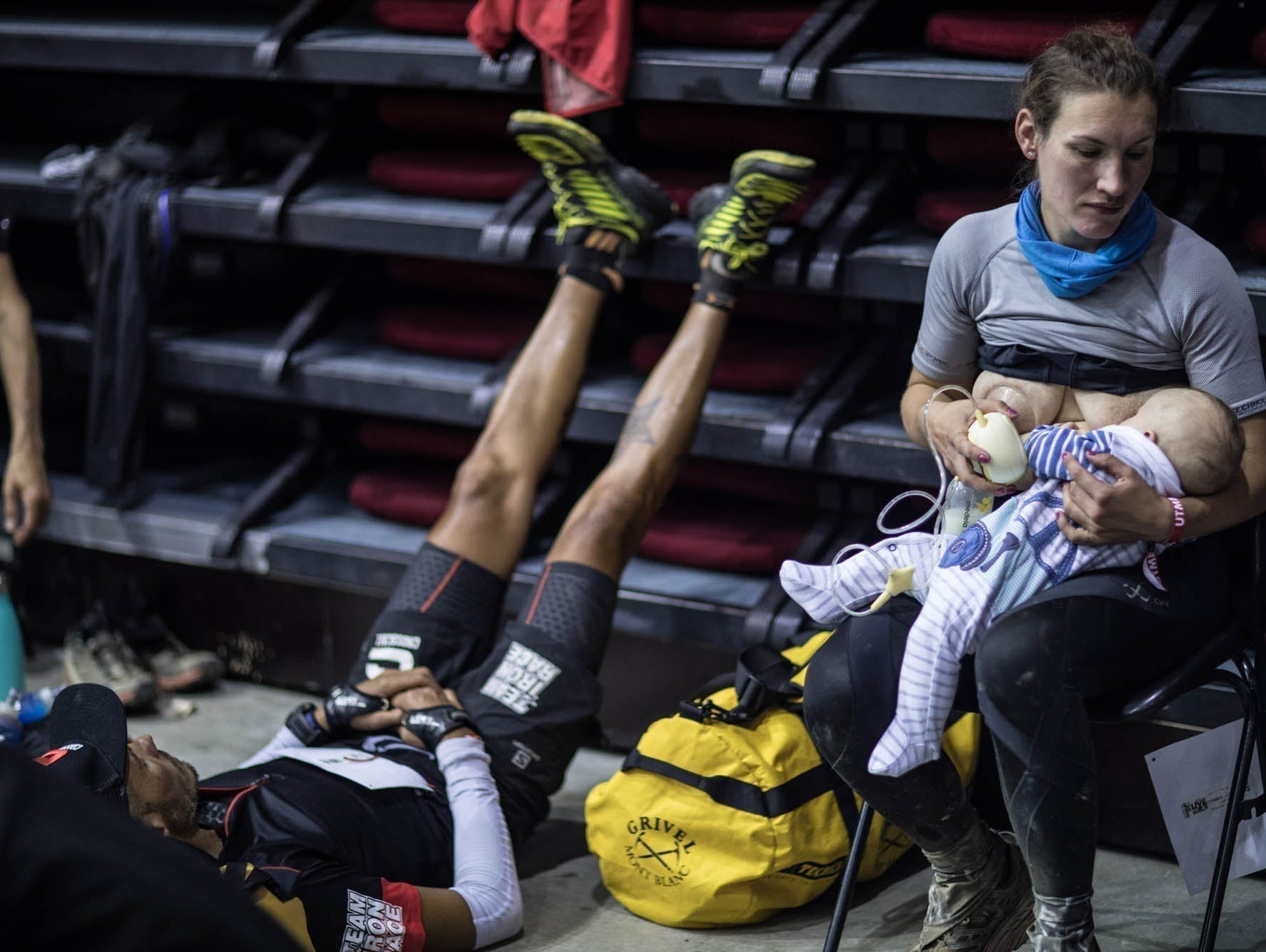
Another common concern is whether running affects milk supply. Current evidence does not show that moderate exercise has any negative impact on breast milk production.
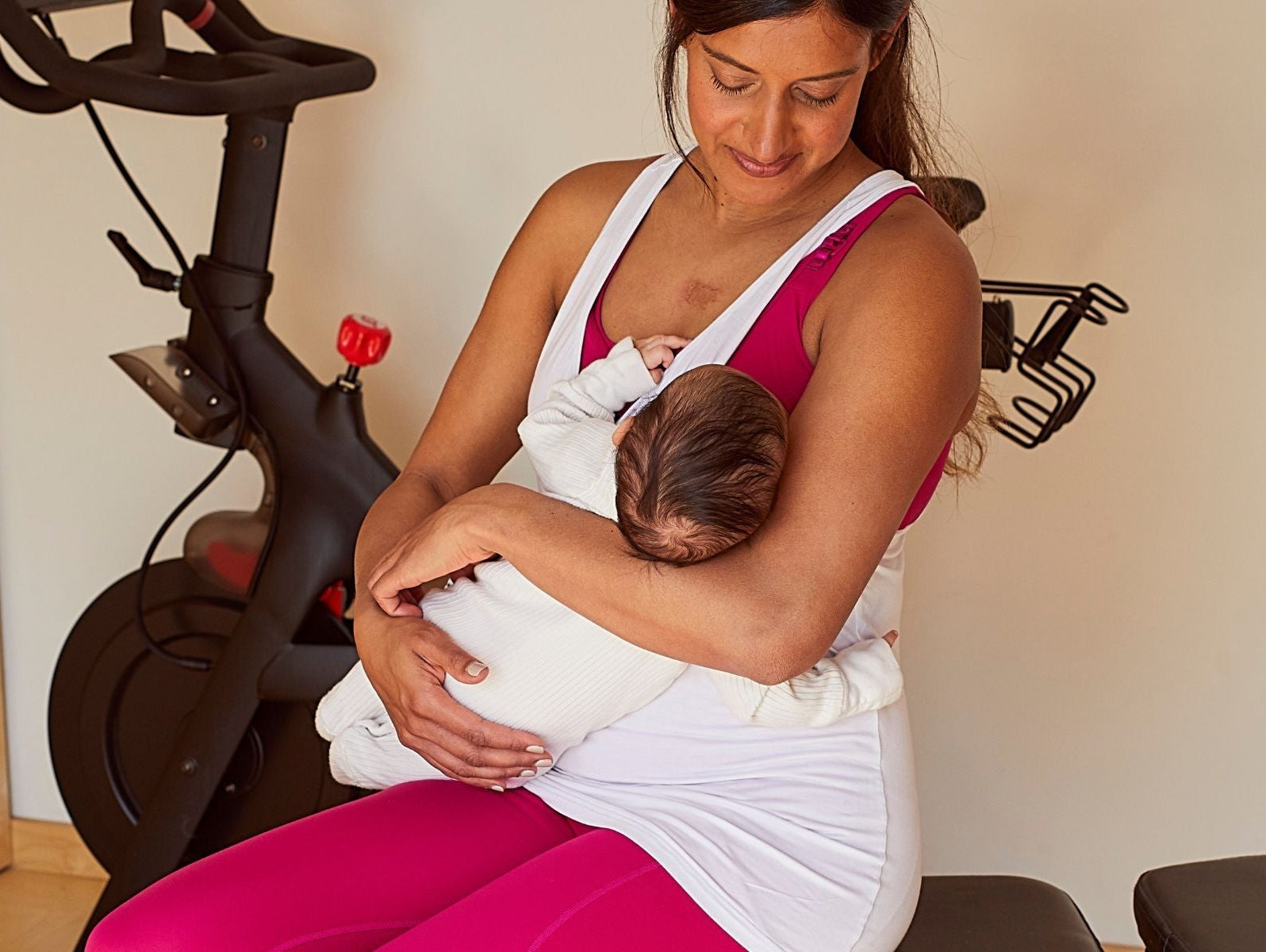
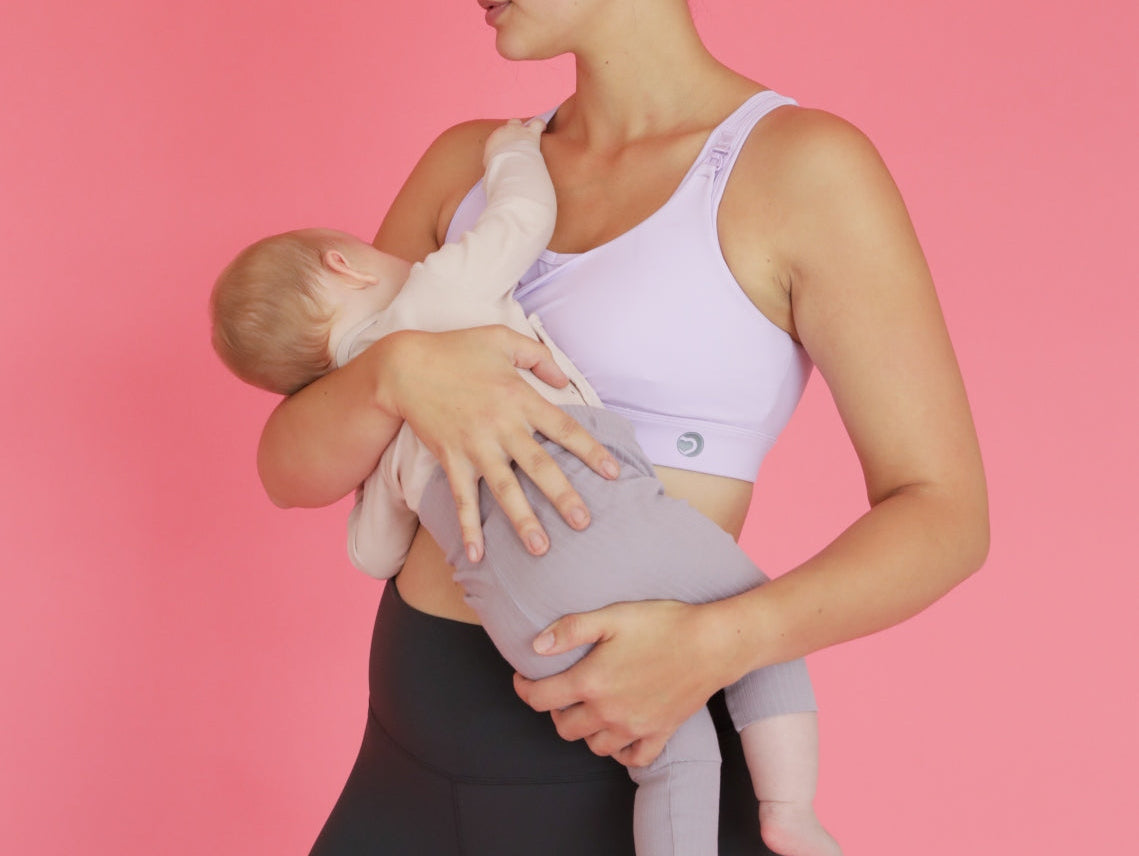
Being comfortable, however, is another matter entirely. Feeding before you run and wearing genuinely supportive clothing (such as our breastfeeding sports bras!) can make the experience both more comfortable and convenient if you are exercising with your baby in tow. Post-pregnancy breasts are often heavier, more sensitive and fluctuating in size throughout the day, so you need a bra that can accommodate all of this. When you’re not thinking about your bra mid-stride, you’ve probably found the right one!
Signs You’re Not Quite Ready
If when you start or build up your running distance, you find it brings on leaking, pelvic heaviness or any pain, it’s worth pausing and dropping back on mileage or intensity and giving yourself a bit more recovery time. Returning to running should feel controlled and sustainable, not like you’re bracing for impact every step.
So, When Can You Run After Having a Baby?
For most women, around 12 weeks postpartum is a sensible starting point for considering a return to running. But readiness depends less on the calendar and more on strength, symptom absence and gradual progression.
Motherhood alters your body but doesn’t end your athletic identity. Just look at all the incredible athletes who have made strong postnatal comebacks. Even I personally ran my marathon PB after having my 3rd baby and suffering a prolapse that I had to recover from.
Rebuilding may take longer than you expected. It may look different than before. But with patience, structured progression and proper support, running can absolutely return, not as proof that you’ve “bounced back,” but as evidence that you’ve rebuilt well.